In The Eye of The Beholder
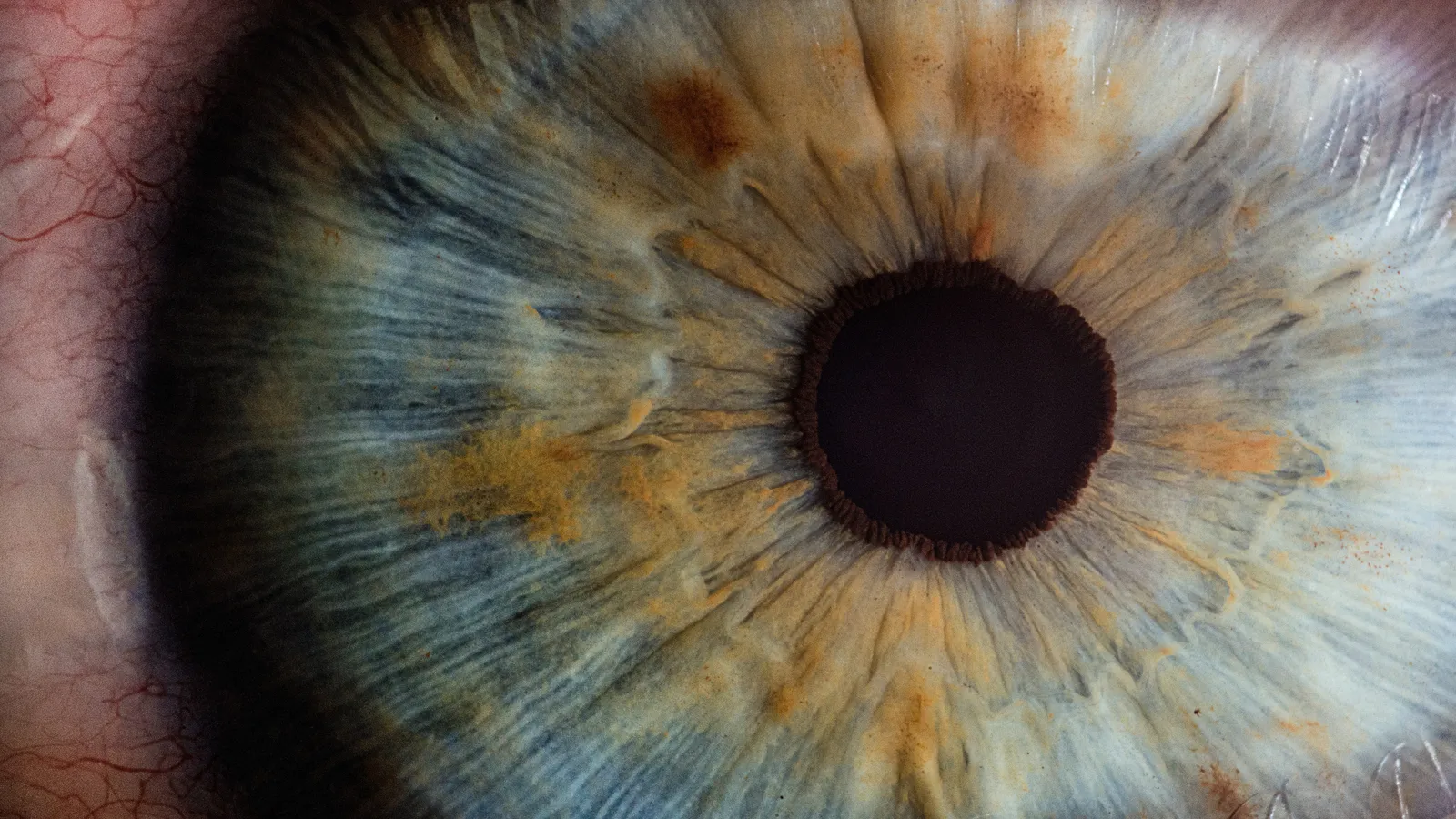
There are 9 major parts to a human eye: the Sclera (that’s the white part), the Cornea (a window, of sorts, that covers the iris and pupil), the Pupil (where the light gets in), the Iris (the eye’s shutter), the Lens (the part that focuses the light), the Retina(a ten-layer membrane of cells that detect light and transform it into electrical impulses), the Macula (part of the Retina that receives the light focused by the Lens), the Optic Disk (the entry point of the Optic Nerve into the eye) and the Optic Nerve (the part that carries the electrical signals to the brain). And, worth mentioning, there are an estimated 6 to 7 million “cones” and 120 million “rods” both of which are crucial in the overall function of the eye.
The eye is a miraculous organ. Yet it is also an organ that fails to perform its proper function of collecting light and sending it to the brain in a way that the brain “sees” clear images. Approximately 20% of the population will require corrective lenses or corrective surgery before the typical onset of age-related sight degeneration (usually around the mid-40s). I, myself, have worn corrective lenses since I was 9 years old.
William Shakespeare, in Love’s Labours Lost (1588) wrote, “Beauty is bought by judgement of the eye, Not utter’d by base sale of chapmen’s tongues”.
In her book “Molly Bawn (1878)”, author Margaret Wolfe Hungerford coined the phrase “beauty is in the eye of the beholder”.
A phrase that became popular in the 1980s, “when wearing beer goggles, beauty is in the eye of the beer-holder”.
Equivalent phrases have appeared throughout recorded history with one reference dating back to 3rd century BC Greek.
The phrase, whatever its incarnation, is a subjective one. In this case beauty can’t be objectively judged; what’s beautiful to one person may not be to another. That is particularly true when discussing with a blind person something that is visually beautiful (to me) or something that sounds beautiful (to me) with a person who is profoundly or completely deaf.
If you’ll indulge me, I’d like to take the physiological eye and, well, look at it from a metaphorical perspective.
A few months ago, I started reading J.R.R. Tolkien’s “The Lord of The Rings” series again. I’m a fan. This time through, I have been paying particular attention to what is “spoken” by Gandalf. Though Tolkien himself insisted there is no moral overtone to his works, it is detectable nonetheless.
In The Last Debate Gandalf says, “It is not our part to master all the tides of the world, but to do what is in us for the succor of those years wherein we are set, uprooting the evil in the fields that we know, so that those who live after may have clean earth to till. What weather they shall have is not ours to rule.”
That statement is absolutely beautiful to me, and has a strong moral overtone that fits our day all too well.
I’ve read Tolkien before. I even made my way all the way through The Silmarillion which isn’t an easy read (by my estimation). Tolkien is, without question, one of my favorite authors. I find much of what he writes beautiful and morally on-point.
However, if I read that passage to my youngest child, he won’t comprehend what I’ve read nor will he likely find beauty in the way the words are woven together. In contrast, there is much that my youngest child finds beautiful in this world, thanks to his sense of wonder, that I have lost sight of.
In order to find beauty, we must behold things.
To behold is to regard or to gaze upon. But beholding isn’t limited to sight. In fact, Hellen Keller was a living testament that we don’t have to possess the sense of seeing or hearing to behold the world around us.
In this day and age of sensory overload, I often take for granted my ability to see and hear with the intent to behold. Instead, sights and sounds just wash over me, endlessly, and I take very little of it in.
It’s not possible to behold everything that assaults our senses and our minds. For that reason, we must be deliberate. We have to choose what to behold. But, making that choice requires us to recognize that we actually can’t have it all. When I want to really enjoy the beauty of a good book, I have to remove all other distractions. I often read in my bedroom where electronics are not allowed. There is no phone to tempt me. In fact, I put my phone on “Do Not Disturb” mode and leave it in another room in the house to remove any temptation to pick it up. There is no television in my bedroom to tempt me. The only thing with any transistors in it at all is my alarm clock (and it’s not a smart alarm clock).
My best beholding moments always come when I’ve rid myself of distractions and focus clearly on just. one. thing.
Comments