On Understanding Herd Mentality
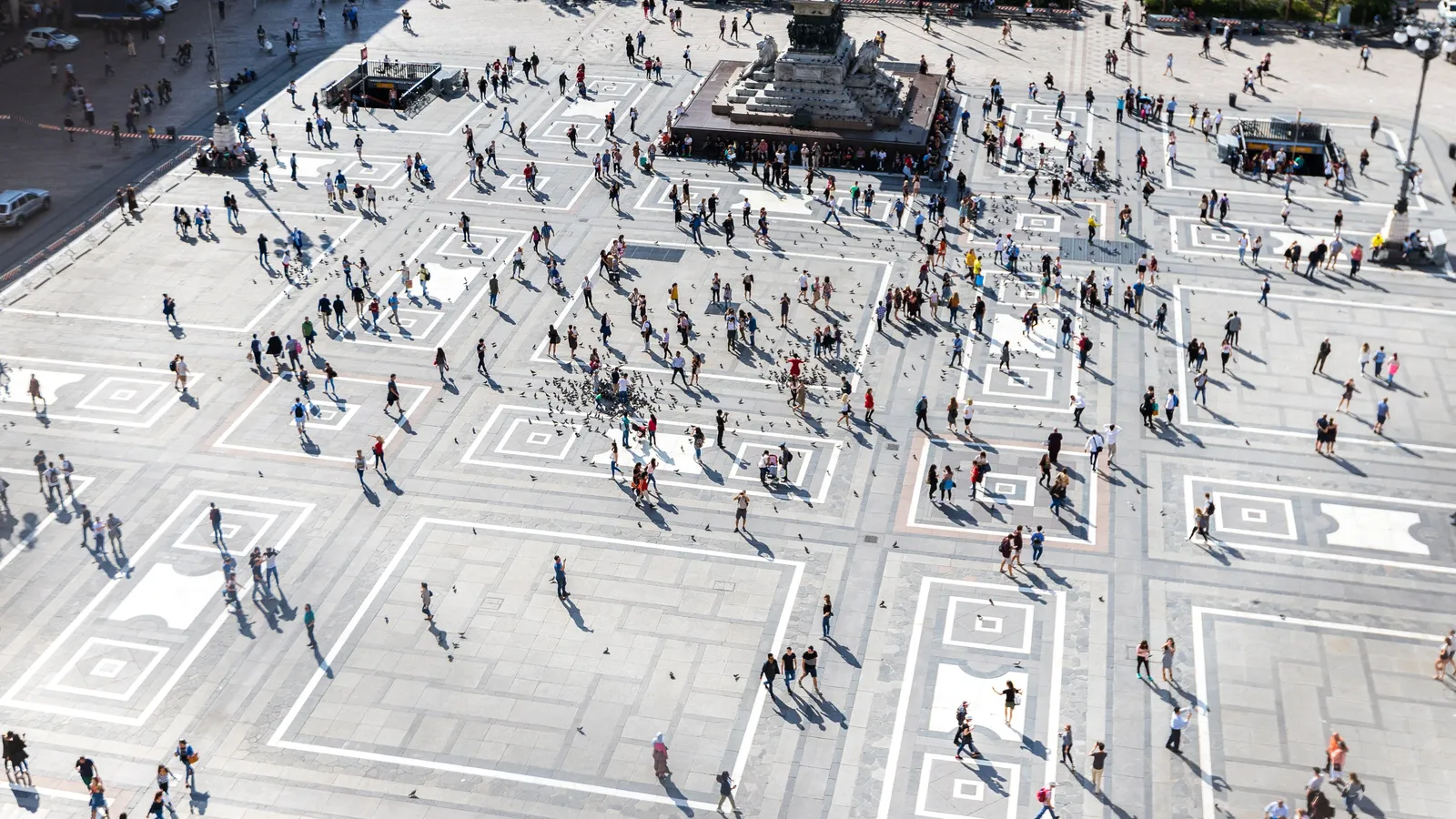
I have complete confidence in the aggregate wisdom of the. . .people, if they are given and made to understand the facts. The wisdom of the mass is always greater than the wisdom of the individual or of the group. . .The slow-moving, deliberate-thinking mass plods along over years down the Divinely appointed way. Led astray, then slowly, cumberously [sic] swing back to the right road, no matter what the toil or the sacrifice may be, and when they start to return, they crush whatever lies in their path. So has humanity come up through the ages. — J. Reuben Clark, Jr.
It’s a beautiful, moving statement; perhaps not altogether true, but poignant just the same. This statement can be true under two conditions: when the people desire good and when the people are not afraid.
Recently, the notion of herd mentality has been interesting to me. (See my previous article on Herd Stupidity.) When an unknown danger strikes, people can either band together and work toward the common good or they can adopt an every-person-for-itself mentality. I think we’ve seen a lot more of the latter in recent months. However, there has also been much of the former.
Herd mentality is a noun phrase meaning the tendency for people’s behavior or beliefs to conform to those of the group to which they belong. For most people, this is unconscious behavior. The path of least resistance is to conform to the behavior of the group. For example, if you become a doctor in the United States, you will probably live in a big house in a nice neighborhood, drive a nice car, and have neighbors who are also doctors, lawyers, and successful business people. Of course, economics keep school teachers (generally) from building homes and living in areas like those. Instead, they build and live in areas that are conducive to their economic state.
Herd Stupidity vs. Herd Intelligence
As groups amass, the pendulum will almost always swing either toward a collective increase in intelligence or the opposite.
Herd stupidity is when a large number of individuals come together, many times without any malicious intent, then descend into behavior that is contrary to the well-being of society.
Herd intelligence, on the other hand, is the phenomenon of a large number of individuals coming together, generally without any malicious intent, then ascending into behavior that is beneficial to society.
The movement can, at times, be very subtle. For example, a group of people may watch a movie. When it ends, the majority are upset with how it ended. If the movie is a work of fiction, then it makes little sense to allow ourselves to be angered by something make-believe. This is an example of mostly harmless herd stupidity.
As we’ve seen in recent months, herd stupidity is at the heart of peaceful protests turned into violent riots.
A subtle example of herd intelligence is when a large group of people attend a conference where they are inspired by the true-life stories of small, heroic acts. The group, as a whole, may come away feeling uplifted, better, and perhaps even a little more intelligent as a result of participation.
A not so subtle example is when large groups of people come together to accomplish great things. Putting people on the moon is such an example of herd intelligence. A lot of really intelligent people got together and did incredible things — pushing the boundaries of science and technology — to accomplish something many people thought was not possible.
It’s a dichotomy that both herd stupidity and herd intelligence coexist in the same society. Since the beginning of recorded history, one group or another has always tried to exercise authority over another. This is herd stupidity at its worst. Slavery, oppression of women, oppression of minorities; these are all herd stupidity generally led by white, privileged males. At the same time, because of their privilege, those same white, privileged males moved forward some of the greatest feats of humanity. That is a mark of herd intelligence. Strides (arguably not enough of them) have been made to make sure the errors of the past are not repeated in the present or future. We’ve a long row to hoe but that’s a topic for another day.
There’s an alarming trend occurring that is fed by the 24-hour news cycle and social media: herd stupidity seems to be gaining speed. These media channels foment fear and misinformation, two things required to bring about herd stupidity. During the riots of the previous months, an estimated 14,000 people have been arrested with no prior police record. (Yes, you can argue that at least some of those were wrongful arrests.)
Continuing the same case, riots broke out, first in the United States, then worldwide, over the wrongful (and highly public) death of George Floyd. In the United States, an additional 19 people (as of June 8, 2020) lost their lives in those riots. Estimated property damage in the Minneapolis-St. Paul area is over $500 million. Stepping back to 1992, 63 people lost their lives in the Los Angeles riots. Untold millions of dollars in damage occurred.
Two tragic examples of herd stupidity.
It is estimated that more than 20 million people have participated in the 2020 racial unrest protests. Many of those are peaceful. Peaceful protest is actually a sign of herd intelligence. But, as we’ve seen repeatedly, herd intelligence can quickly devolve into herd stupidity.
According to Erica Chenoweth, an international relations professor at the University of Denver, violent clashes during election periods were common prior to the World wars. Since then, the transition in the office of president has largely been peaceful. In 2020, whether Mr. Trump is reelected or not, promises to test whether we’ll engage in herd intelligence or stupidity.
Will societal desire to do good and be not afraid prevail or will the election of 2020 bring about a quick descent into nationwide herd stupidity?
Which side of the fence will you be on?
Comments