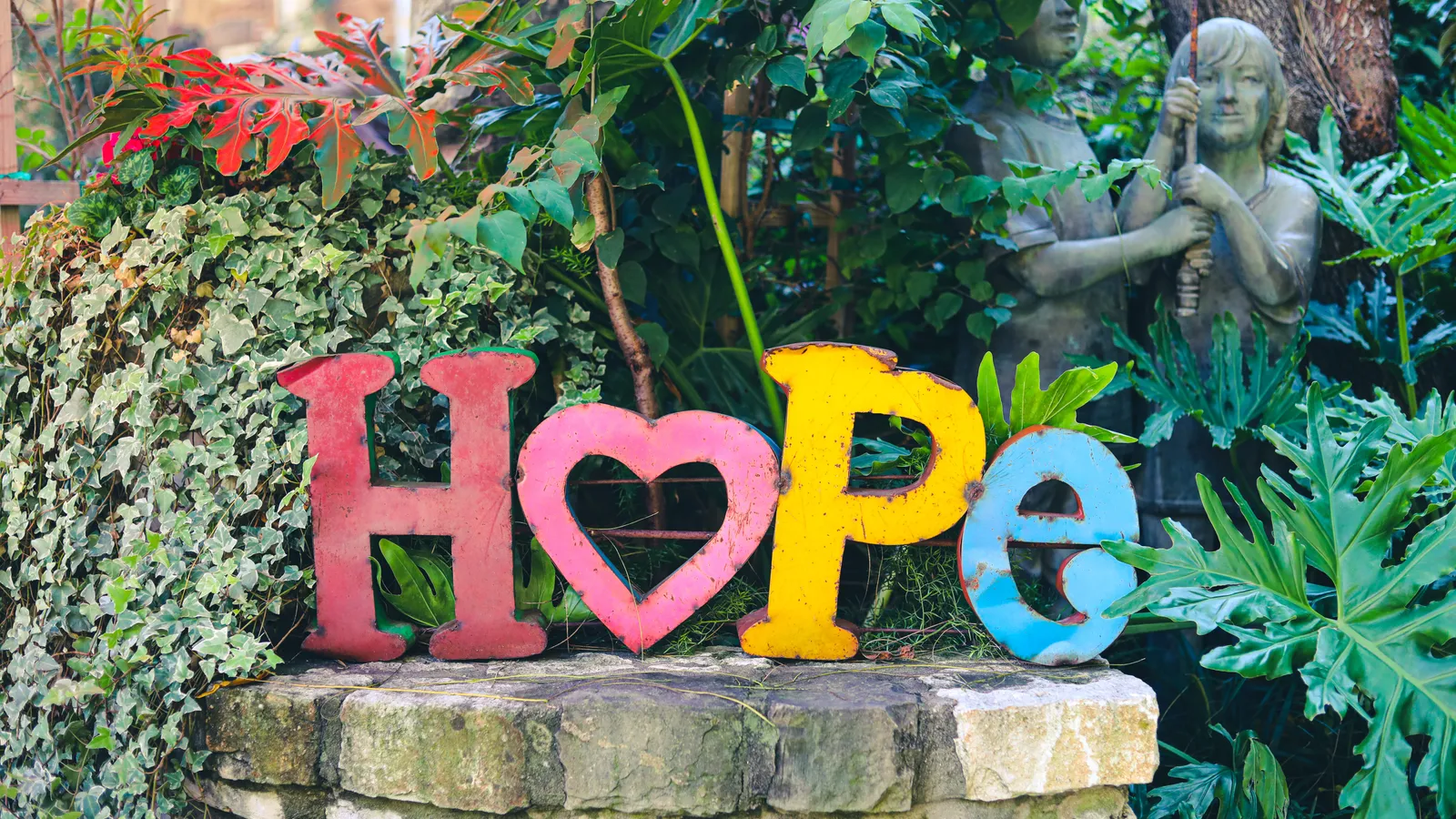
Hope for Something
Most days, I wake up intolerably early. I eat my favorite protein bar (the G2G Bar, if you want to check it out), doom-scroll the news for a few minutes, strap on my running shoes, and hit the streets around my neighborhood.
I often run with friends. I don’t generally run for a personal best or because I’m training for something. Running is my primary form of exercise. It’s something I need because I have a desk job. . .sometimes. . .and I know I need to get up and move my body.
When I run with friends, we talk about family, work, church and religion, politics, government, and dad jokes. We talk about world issues, and how small we feel against the backdrop of all the human suffering that exists in the world.
We laugh a lot. Occasionally, somebody cries. Our running group has been running together for more than 25 years. We are each other’s best friends and, sometimes, therapists.
We regularly run between 4 and 20 miles and more. I know, for some people, 4 miles represents more miles than they will run in their adult lives.
For us, running serves two purposes: socializing and exercise. I don’t run paid marathons because I’m out there, pounding the pavement, first and foremost to be with friends. I do have a high stress job so the exercise is also good to temper some of the stress.
Barring injuries sustained while exercising and those who use exercise as a form of self-punishment, I believe most people who engage in exercise are generally happier after a good workout.
Running is also a great opportunity for me to refocus my mental energy. I use running as a time to process emotions. I use it as a time to connect with God. I think about my wife and our children; our extended family; friends and acquaintances — people I want to reach out to with whom I’ve had no interaction in a long time; the people who are making discoveries everyday that improve life for thousands (maybe millions) of people.
Those are things that give me hope.
Barbara Kingsolver once said,
The very least you can do in your life is figure out what you hope for. And the most you can do is live inside that hope. Not admire it from a distance but live right in it, under its roof.
What a powerful statement!
How do you find hope?
That’s an existential question.
Every person needs hope. Without hope, life can appear not worth living. People survive the most dire circumstances, in part, because they cling to hope; hope that things can and will be better.
Most people’s lives are not completely devoid of hope. Circumstances or extreme depression may make it very hard to find that hope, but there is a glimmer of hope in everyone. You find hope by looking for it in everyday experiences.
If life is just horrible right now, think about a past event that made you happy or find something, however small, to look forward to. That moment, however brief, can be the spark that begins the flame.
Gratitude is something we hear and read a lot about. Gratitude is the air that gently fans the flame of hope.
You can pretend at gratitude, but insincere gratitude isn’t really gratitude. While it’s important to express thanks to others, the power is in what it does for us individually. So, if you have to start small, start small.
Make a quick mental list of the things you’d like to be grateful for. For me, it actually helps to put it on paper. Then, you can read through that list, focusing on each item you just wrote down. Stop on the first thing that lifts your heart and mind, even if just a little bit.
Dwell on it. Let it grow up a little. The hope you find may not last long. Don’t beat yourself up. You’re practicing finding hope in everyday experiences. It can take time, particularly in difficult circumstances or depression.
What do I do with hope?
As you practice, you’ll find hope in an increasing number of places. When you find it, cultivate it. Hope grows like garden. Cultivate it and it’ll grow. If you neglect it, the opposite will be true.
Here’s a short list, in no particular order, of things you can do to cultivate hope:
Be grateful
Serve someone else
Do something you love. If you don’t feel like you love anything right now, do something you like.
Find something new that you like.
Be with people you like or even love. If you feel like you’re alone, find someone you can like or even love. Wherever you are, chances are you’re not alone in feeling alone.
Think about your thoughts; challenge whatever notions you feel like keep you from finding hope.
In challenging times, finding hope can be hard, but not impossible. To begin, you might have to force yourself to look for it. If you feel like your life is really has no hope then it’ll be particularly challenging but absolutely worth the effort. Remember to start small and give yourself permission to fall back. Just make sure you remember to pick yourself up again. That’s where the growth is.
Most of the time hope isn’t about escaping the circumstances of our lives but learning to gravitate toward the things that make us better in spite of our circumstances.
Wilford W. Anderson once said, “hope, with its attendant blessings of peace and joy, does not depend upon circumstance.”
Thanks for reading!
Comments