Who Are You When There’s Nobody to Impress?
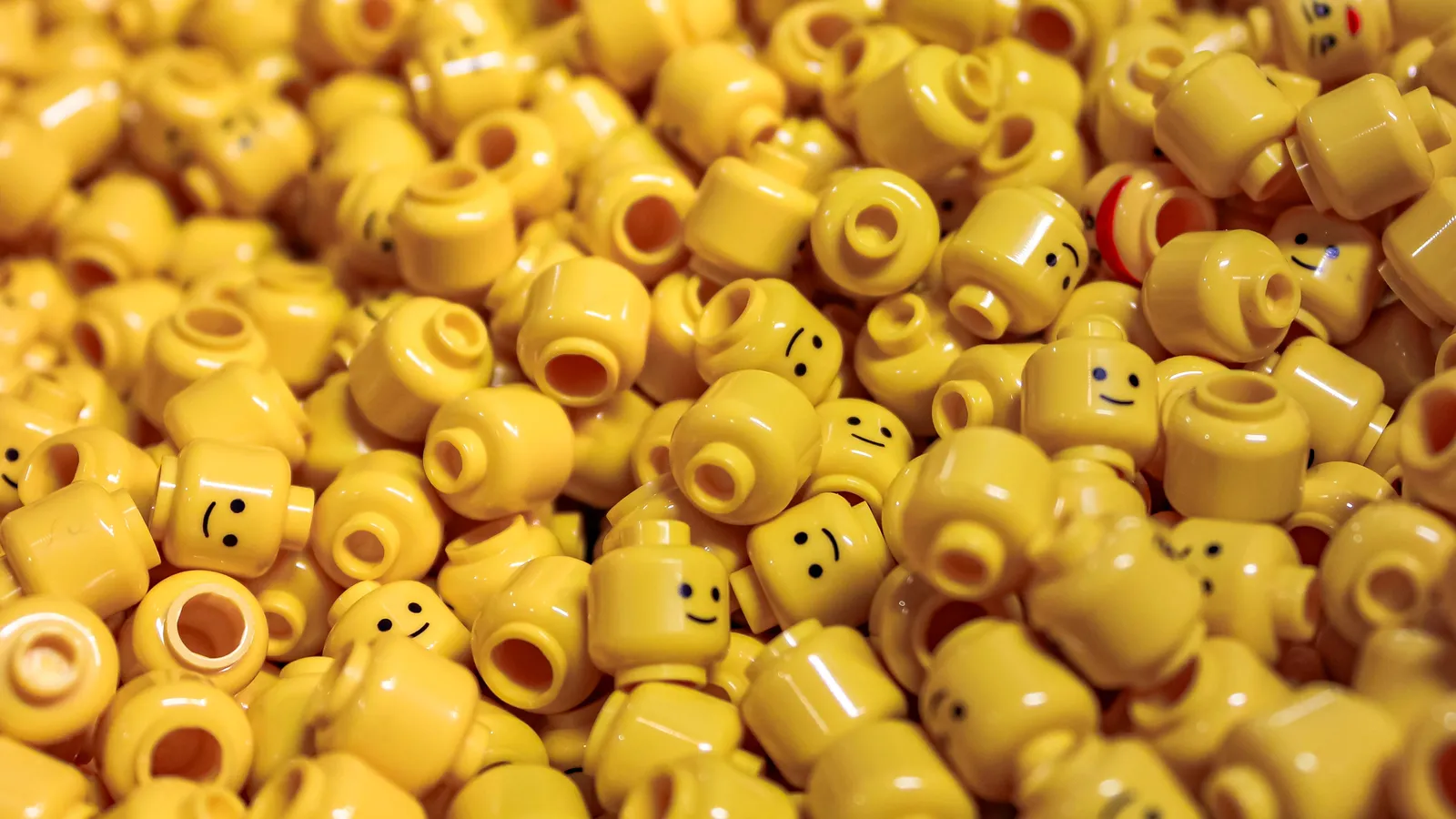
We’ve all been there — sitting in a group of people with whom we have little in common. We tell ourselves stories about their expectations of who we should be. It doesn’t matter if anyone echoes our stories out loud, we often develop a feeling that we need to measure up to those real or pretended expectations.
Maybe it’s a group of people we know really well, and the same thing occurs.
The desire to measure up may be strong enough that we adopt a persona different from who we are in other settings.
To varying degrees, this happens often and to many of us: who we are at home is different than who we are at work, in social circles, in religious settings, and alone.
This behavior is tied, at least in part, to a desire to fit in. Evolutionists might argue that it’s a trait developed over millennia in order to ensure our individual and collective survival.
Social chameleonism is likely not a term that originated with Dr. Mark Snyder of the University of Minnesota, but he is one of the first to use the term in an academic setting. In a 1996 paper, Dr. Snyder wrote that “high self-monitors” or social chameleons are those who display a handful of key traits:
They pay careful attention to social cues so they know what is expected before they respond.
Once they believe they understand the expectation, they try to act according to that perceived expectation.
Depending on how developed the person’s social abilities are, they may succeed in molding their appearance to whatever the situation demands. People with highly developed social skills may be effective at this situational adaptation without coming across as fake or disingenuous.
It’s a valid argument to state that being something you’re not is never a good thing. On the other side of that coin, however, is the idea that we are in a constant state of mental evolution, and may spend our entire lives figuring out who we are.
To a degree, everyone is a social chameleon.
Setting the extremes of philosophy aside, the upside to this kind of adaptability is having the flexibility to “fit into” any social situation. In situations where leadership is required, this facilitates gaining the approval or loyalty of others.
On the downside, hyper-adaptation leads to superficial relationships, insecurity or inability to believe people will accept you for who you really are, and wearing yourself out “playing the role.”
Who are you. . .really?
Identity is formed by the experiences we have, the thoughts we entertain, and the people with whom we associate. The influence of other people on identity is particularly true when we’re young. As Kendra Cherry, MSEd, observed, “Kids who are raised in a supportive environment receive the care, support, and encouragement that they need in order to develop a healthy sense of self. Children raised in less supportive environments where they encounter neglect, abuse, or over-parenting, on the other hand, may struggle to forge their own strong identities.”
It’s a generalization with a lot of exceptions. We’ve all heard stories of the underdog kid who grows up with a triumphant sense of self while kids raised in nurturing homes grow up to have a terrible sense of identity.
If you tend more toward the latter than the former, it can be difficult to contemplate the question: who am I when nobody is around. At times, I’ve struggled to answer that question for myself.
The Kung Fu Panda franchise ranks among some of my favorite movies. In Kung Fu Panda 3 Po faces off again Kai in the spirit realm. After an intense battle, Kai is at the point of taking Po’s chi. Po receives help from the mortal realm and we finally see the emergence of the “real dragon warrior”.
Kai asks Po, “who are you?”
Po’s response is at the heart of identity: “I’ve been asking myself that question. Am I the son of a panda? The son of a goose? A student? A teacher?”
[Dramatic pause]
“I’m all of those things.”
Humans, by nature, label things. We have a particular knack for labeling ourselves and others. Those labels — self-applied and otherwise — build our personality (for better or worse). Adherence to labels is how we identify: I’m a husband, a father. I’m a writer, a programmer, an employee. I’m a friend, a child of God. I’m distracted, not a finisher. I’m a runner, an eater.
That’s not an exhaustive list, but it does hit on the things with which I label myself most frequently.
The labels to which we hold most tightly are the ones that define us. They are the personality traits or life choices that define who we are when no one else is around. Strict adherence to the “husband” and “father” labels, in particular, drive a lot of my behavior. For example, I try to be a good employee in my regular job so that I can make enough money to provide my family with a comfortable lifestyle.
Labels that motivate us to do good and be good are the ones we want to keep. It is those labels that have the potential to negatively impact our self-worth that need to be ripped off and discarded.
To remove those labels, sometimes we have to sit quietly in a darkened room with our eyes closed and contemplate things like:
What labels do I wear that negatively impact my self worth?
What do I like and dislike?
What’s important to me?
What are my beliefs?
What are my values?
What are my goals?
If I weren’t concerned about money and/or health, what would my life be like?
What do I need to do to learn to trust myself?
Figuring out who we are has a lot less to do with trying to impress others, and more focus on impressing ourselves. On this journey of self-discovery, don’t be afraid of failing to live up to someone else’s expectations. Having realistic expectations of ourselves and meeting those expectations is the measure of who we are when nobody else is around.
Comments