Unless It Was Written by Ryan Holiday, It Was Probably Written by AI
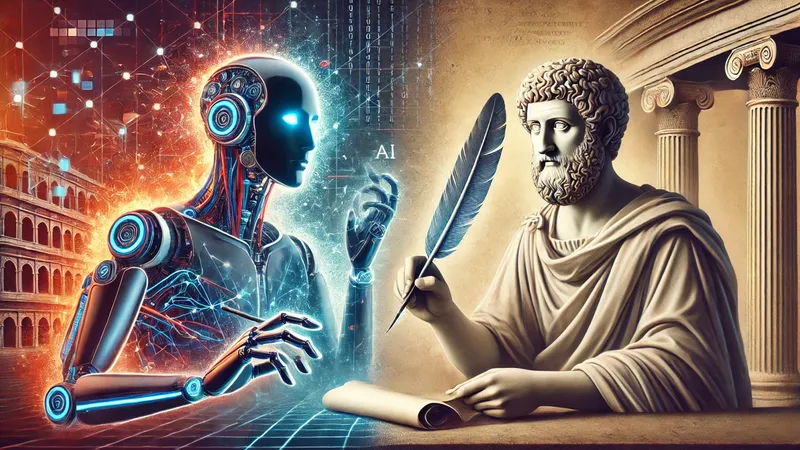
I’m certain I’m not the first person to try this exercise, but I found it fascinating. I took a recent article written by Ryan Holiday and pasted the contents into one of those fancy “AI detectors.” I then asked the question, “How likely is it this article was written by AI?”
The AI detector indicated that based sentence structure, stoic references, generalized appeal, and balanced tone, it was 60–70% likely that the article was generated by AI.
In a separate session, I made the statement, “If I told you this article was written by Ryan Holiday, how likely is it that it was written by AI?” Then, I provided the article’s contents.
It referenced the balanced writing style and stoic references again, but then indicated that because Mr. Holiday often writes about such things, and that he’s a gifted writer, there was less than a 10% chance it was written by an AI.
I did the same analysis on a longer piece of prose written by John P. Weiss and it was rated at only 15% likely that AI had a hand in writing it. Once the AI knew it was written by Mr. Weiss, it rated it below 5% it was written by AI.
Those of us who lived before AI became the modern equivalent of a ditto machine — we had one of those in my elementary school — you’ll recognize that AI writes like Ryan Holiday because authors like Mr. Holiday’s works have been used to train AI.
Here’s the interesting modern-day dilemma: the more polished and professional your writing becomes, the more likely it is to be called AI by an AI detector.
What’s the answer?
Well, according to ChatGPT:
Transparency in Authorship. Human authors can take pride in their work by being transparent about their process, inspiration, and unique contributions. Sharing the context behind a piece (e.g., personal experiences or research) can establish authenticity that AI cannot replicate.
That feels a bit like “click here to prove you’re not a robot.”Redefining “AI-Like.” Instead of stigmatizing polished writing as “AI-like,” we can celebrate it as a standard of quality. The focus should shift from whether something could have been written by AI to whether it resonates with readers and achieves its purpose.
Human Connection. Professional writers bring depth, perspective, and creativity born from lived experience. AI can simulate structure and tone but lacks the emotional nuance, moral deliberation, and originality of human thought.
The question isn’t whether something could be written by AI, but what makes it meaningful. The modern writer’s challenge is to embrace their unique voice and lean into what AI cannot imitate: the messy, beautiful, deeply human process behind creation.
Thanks GPT.
While it’s getting harder for people to be heard in a sea of AI voices those who work hardest at it will gain a more significant advantage because their voice is original. For now, the likes of Ryan Holiday and John P. Weiss are probably safe. For the rest of us. . .
Comments