When Your Ego Wants a Microphone
I was a first-year college student, sitting in Chemistry 101 at the University of Utah, feeling unusually prepared. I had taken AP Chemistry in high school but hadn’t taken the exam because I didn’t feel quite ready. So this introductory class was supposed to be review, like an easy reentry into material I already knew.
The lecture hall held more than three hundred students. It was one of those tiered rooms that make the professor look especially small when you’re seated on row 50, 35 feet above where the “stage” is. We were fifteen minutes in when I realized half the class had no interest in being there. A few were half asleep. It was 1997 so nobody had a phone to scroll on, but there were plenty of people finding more interest in their hands than what the professor was saying.
Then the professor asked a question.
“Is an egg going from shelled to scrambled a physical or a chemical reaction?”
My hand shot up faster than my mind. “Physical!” I said, with far more enthusiasm than the question deserved or I had intended.
The professor turned away from the class, paused just long enough to make me hopeful, then said flatly, “Wrong.”
You know that zoomed-out-to-zoomed-in effect in movies where the main protagonist realizes that everyone in the room is starting at them and the words are rebounding inside their skull. Yeah, that’s pretty much how I felt in that moment.
The word wasn’t actually echoing, but in my mind it rolled around the hall like a marble on concrete. I sat there frozen, trying to look unfazed, pretending to take notes. He went on to explain that physical changes are reversible, while chemical changes are not. That explanation didn’t sit right with me. There are reversible chemical reactions, but I kept that thought to myself.
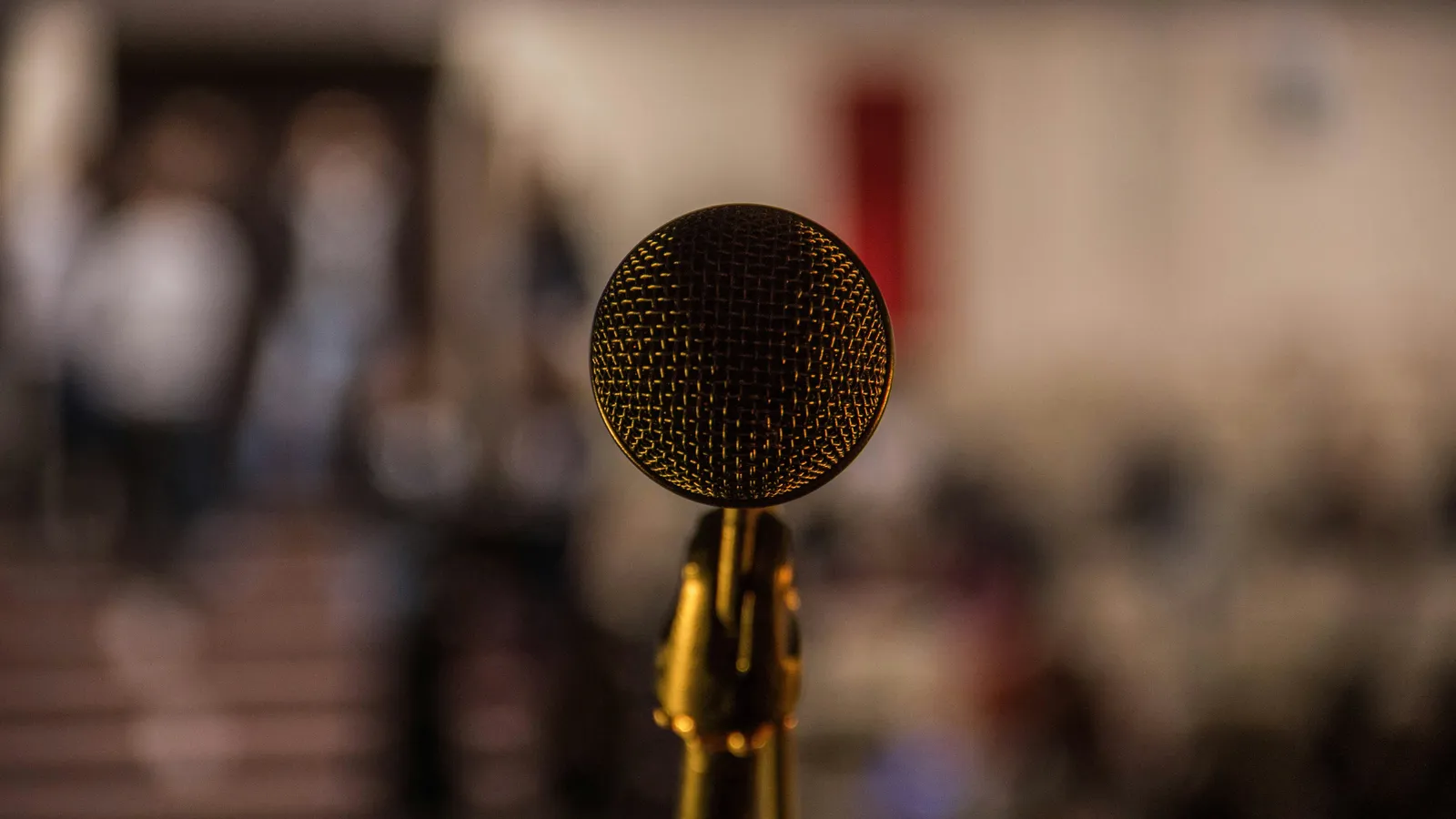
That day, whether I realized it or not, my ego wanted a microphone.
I wanted to be smart. I wanted the professor to notice that I was one of the few students actually paying attention. I wanted the class to see I knew what I was talking about. But what came out instead was a loud, confident mistake.
I never raised my hand again that semester. Not once. I sat in the fortieth row, took notes, and disappeared into the anonymity of the dimmed lights at the back of the auditorium. The microphone I had been so eager to grab suddenly looked heavier than I could lift.
In that moment, it was an honest mistake. I was trying to prove something that I thought I already knew.
That instinct—the need to be seen as capable, right, and informed—shows up everywhere. It’s a habit that once served me well. In my younger years, speaking up meant opportunity. It meant recognition, credibility, belonging. I wanted to be the kind of person people looked to for answers. The louder my confidence, the safer I felt.
What once felt like a strength has started to feel a lot more like noise.
I see it now when I scroll through news feeds and comment threads, when I watch political debates or even listen to professional meetings. Everyone seems to be reaching for a microphone, certain that the world needs their take. We’ve built a culture that rewards commentary more than comprehension. The faster and louder the opinion, the more likely it is to be heard, no matter how shallow or filled with lies it might be.
I’ve been part of that noise more times than I’d like to admit. Not just online or in meetings, but in conversations with my kids, my colleagues, my friends. There’s a certain rush that comes with saying something that lands, with offering advice that gets a nod of approval. It feels good to be right.
It feels even better to be recognized for it.
But somewhere along the way, I’ve started to notice the quiet people. The ones who don’t need the spotlight but always seem to ask the right questions. The ones who listen so much more than they speak. Their wisdom doesn’t come dressed in certainty. It arrives without fanfare, like something that’s been tested in silence before it’s shared.
I used to think leadership meant always having something to say. Now I think it might have more to do with knowing when to stop talking.
When my ego wants a microphone these days, I try to pause. I ask myself whether I’m contributing something real or just trying to reclaim a feeling I once mistook for worth. Sometimes I still give in. I still speak up too quickly, still hear that subtle need for approval humming beneath my words. But more often, I stop and let the silence do its work.
That silence feels different now. It’s not the shame of being wrong in front of three hundred people. It’s the peace that comes from no longer needing to prove anything.
I’m learning that wisdom doesn’t need volume. It needs humility. It needs the patience to wait until there’s something worth saying, and the courage to let it stay unsaid when there isn’t.
And that is enough.
Comments