Never Stop Digging
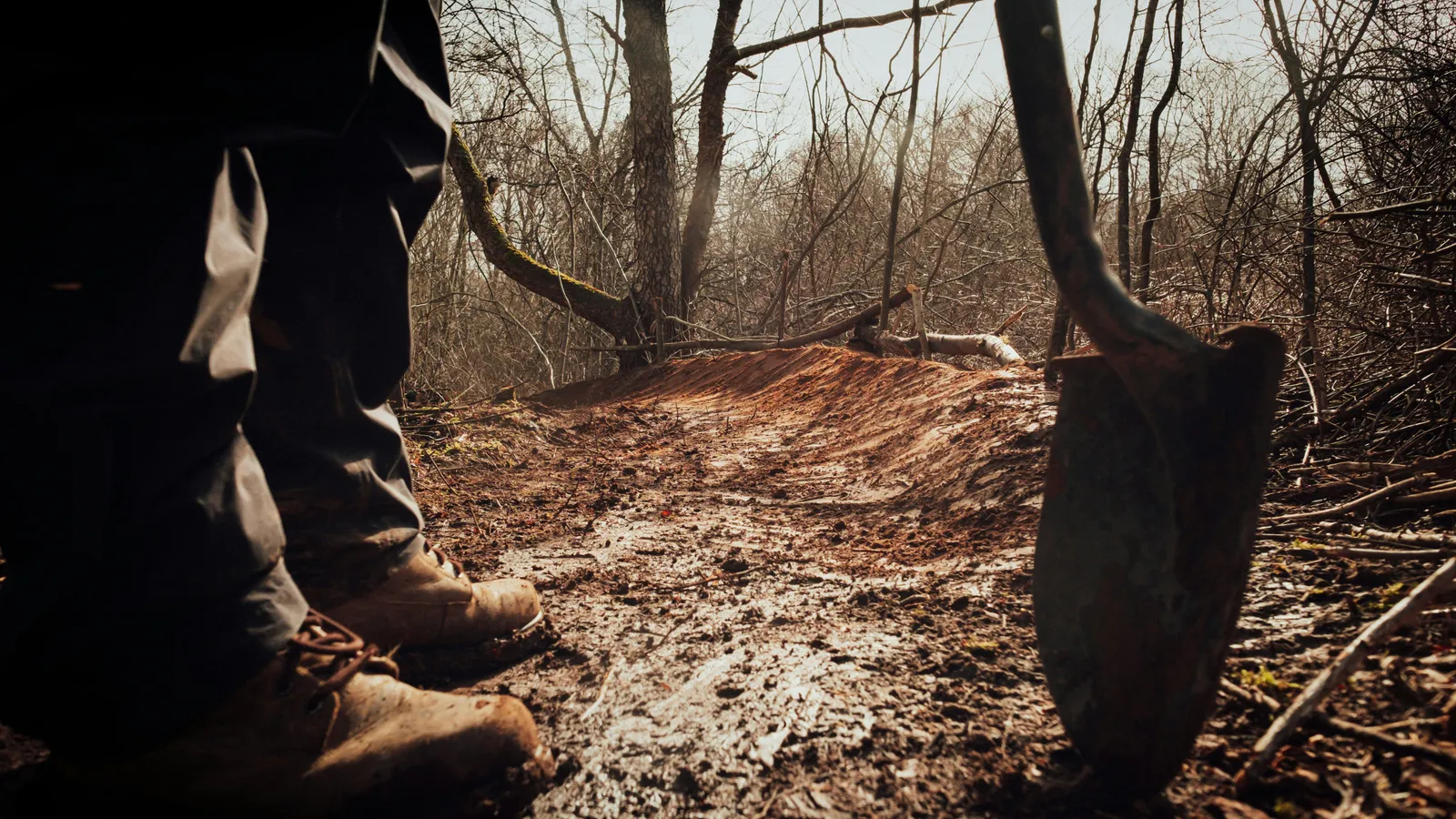
My hands, arms, and back ache. The pain is familiar and foreign at the same time.
West Jordan, the city where I live, has merciless soil. The fact that things grow here is miraculous considering the soil is mostly rock but covered with enough dirt to give the illusion that it might be workable.
It isn’t.
In clearing just a small section of our yard, we’ve pulled out enough rock to landscape large areas of our property. What was hidden beneath a few inches of topsoil now borders our garden boxes and creates a creek bed landscape, visible and undeniable, with plenty of rocks to spare. It’s one of those things you never pay attention to until you try to calculate how many tons of rocks you’ve actually moved. It’s staggering.
Now we’re planting trees, which means digging holes large enough to give them a fighting chance. Each hole required removing about a cubic yard of rock-dirt. Nothing about it was easy. Every hole took me about three hours, and over the course of two days I spent close to nine hours working through dirt that consistently surprised me with big rocks, small rocks, clay, and sand. I couldn’t have counted the number of times I drove a pry bar into the ground, swung a pick into something I couldn’t see, or scraped away loose soil just to uncover another layer of resistance mocking me.
Each time the pick hit solid rock, the impact sent shockwaves through my hands and into my arms and back, a painful reminder that this wasn’t the kind of work my body’s been doing lately. Even in the cold morning air, sweat ran down my back and from my forehead into my eyes as I forced myself to keep going, alternating between achingly slow progress and being stopped by something that simply refused to move on the first attempt. It was slow, physical, and unrelenting.
At some point, a thought started hammering away at the inside of my brain: I should have done this twenty years ago. That is, after all, the best time to plant a tree.
The thought became pervasive. It showed up when I paused to catch my breath or adjust my grip, but especially when I allowed myself to feel the difference between what I can do now versus what I could do when I was much younger.
The truth is, I’ve never been particularly strong, but I used to be more capable than I am now. In my early twenties, I worked in a warehouse where most of my day was spent moving heavy product around. It was repetitive and tiring, but it built baseline strength and endurance that I took for granted back then.
Over the last couple of decades, my work has changed. Like many people, I’ve moved into roles that require more time sitting than moving and certainly more time thinking than lifting. Long stretches at a computer replaced the once steady physical demands of warehouse work that defined my workdays. Until I was digging those holes, however, the thought never occurred to me what I was giving up. Moving to a desk job always felt like progress.
I traded physically demanding work for work that is mentally strenuous but requires very little physical effort. That new work paradigm didn’t keep me ready for physical resistance.
The ground didn’t change in measurable ways in the last twenty years. It’s always been hard, uneven, and full of things you can’t see until you hit them. What changed is me. The strength and endurance that used to come without much effort didn’t disappear all at once, of course. They are the kinds of things that faded gradually as they were replaced with patterns of work that asked less of my body. Over time, the absence became the new normal.
It’s hard to pay attention to changes that are twenty years in the making. In this case, I didn’t make a conscious choice to become less capable. Life adapts and routines shift. As long as nothing demands more from you than you’re currently giving, everything seems fine. The absence remains invisible until something forces a reckoning.
Digging those holes made that gap flash like the first burst of sunlight after opening blackout curtains in the morning.
I’ve dug holes in West Jordan soil before. I know how hard it is. There was nothing remarkable about the resistance. What really hit me, though, was how much harder it felt than I believed it should have been. While difficult, twenty years ago I could have picked, shoveled, and smashed my way through that project in one-half the time and one-fifth the physical soreness. There were more than I few times while I was working when I questioned whether I would be able to complete the project during the weekend I had at all. I wasn’t mentally prepared for the kind of effort that was suddenly required. That’s where the regret tries to take hold with it’s over-simplified explanation that always points backward instead of forward.
I should have done this twenty years ago.
While there’s some truth in that thought, it doesn’t solve anything. The ground doesn’t suddenly become more yielding because I wish I had started twenty years ago. The holes still had to be dug if the trees were going to have a place to grow. The only real option was to keep working, even if it was slower and more demanding than when I was younger.
So I kept digging.
Each blow with the pry bar or pick broke a little more of what was in the way. Each shovelful cleared space that wasn’t there before. It was a process of breaking and removing, breaking and removing, and of creating room by dismantling what had been compacted over eons. It was neither efficient nor easy, but it was, in the end, effective because of sustained effort.
Somewhere in the middle of the process, my mindset started to change. I knew that sustained effort, however slow, was the only way I would achieve the required width and depth in each hole. My physical capabilities didn’t increase. My muscles and joints ached more with each stroke, and I slowed down. The work didn’t get any easier, but somehow I became slightly more capable of doing it just because of a shift in perspective.
The change didn’t come from wishing things were different. It came from just continuing to do the work in front of me.
It’s a pattern familiar to all of us, even if we don’t recognize it all the time. We stop doing certain kinds of work because something else takes its place. The new work may feel productive, important, and necessary, so the old work fades into the background. Over time, the absence compounds in indiscernible ways until we encounter a situation that demands more than we’ve been maintaining.
When that happens, the regret monster drives the instinct to look backward and measure our present gap between where we were, where we are, and where we think we should be. Unfortunately, that comparison can’t restore what’s been given up or lost, and it doesn’t make the work any lighter.
The only thing that can make a difference is returning to the work itself.
We return in the same practical way that digging a hole in hard ground requires. You start where you are, apply effort, make incremental progress, and you keep going even when it feels inefficient or too late. Over time, the capacity that faded or disappeared starts to rebuild, shaped by the very same things that created it in the first place.
The ground (whatever that might represent for you) remains what it is.
The variable is whether you are willing to engage with it.
Digging those holes really didn’t change the soil around my house very much. It did change my relationship to it. It forced me to confront the gap between my intentions and my capabilities, and then gave me a way to start closing that gap again. The work was definitely slower than it was years ago, and it cost me more time and energy than I could have anticipated, but it also proved that the only real way forward is through continued effort. I think Ryan Holiday would argue that the obstacle is the way.
The trees will grow in the space I made for them. They don’t care how hard or easy the work was. They only needed that the work be done.
In the same way, the parts of our lives that require strength, endurance, or discipline improve because we return to the kind of work that sustains them and refuses to let the work disappear again.
The lesson isn’t about when I should have started, but about not stopping again.
Comments