Darwin vs. the Big Mac
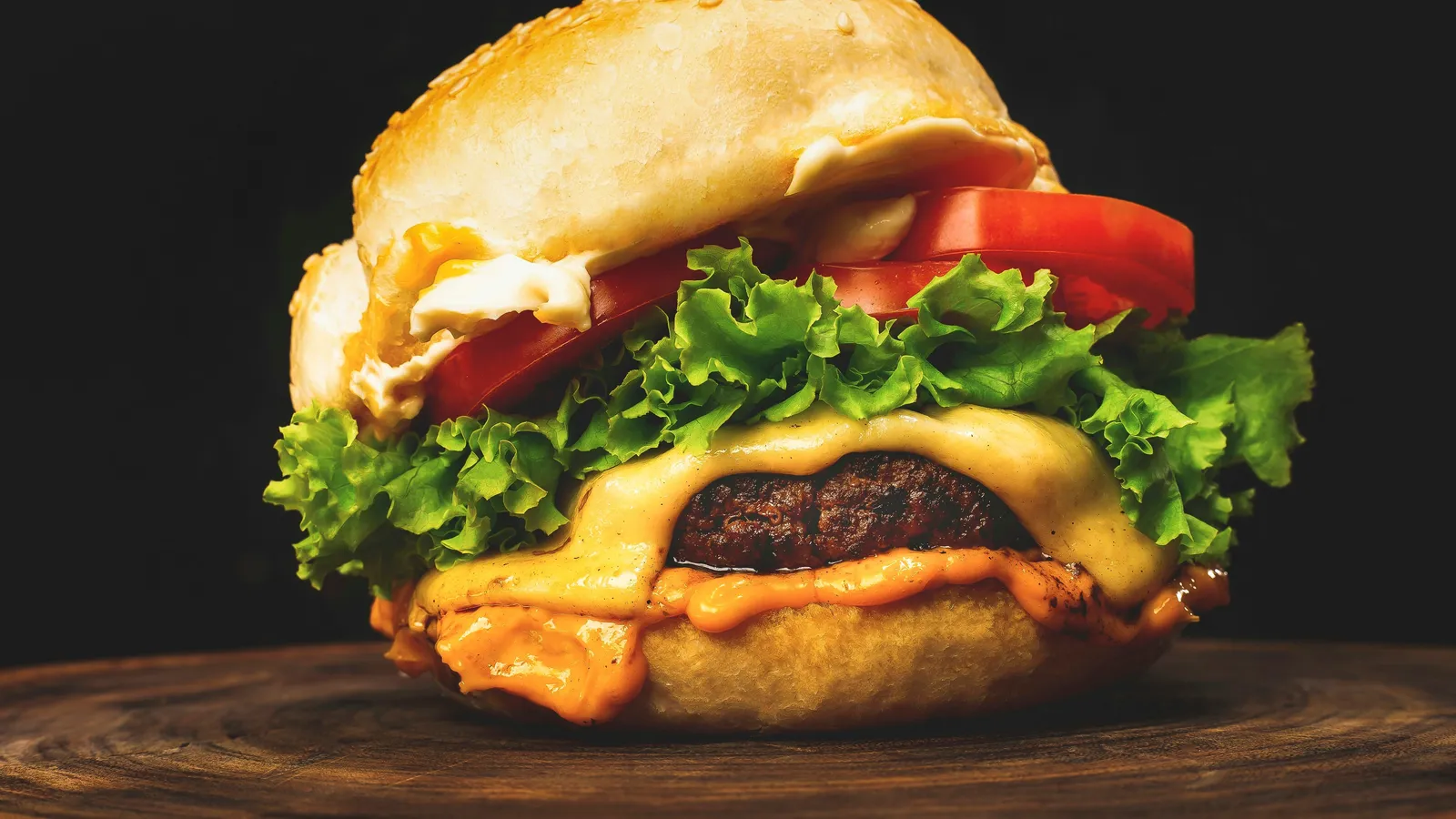
Recently, I sat in a McDonald’s drive-thru staring at the glowing menu as options flashed in front of my eyes faster than I could process them. I had just finished reading The E-Myth Revisited, where Michael E. Gerber seems to worship at the Ray Kroc altar, although I suspect he does so from a safe distance and with considerably fewer french fries.
Less than five feet away sat the glimmering monument to my immediate desires: a Big Mac, a Diet Dr Pepper (light ice), and a large vanilla shake. That’s an order assembled with the nutritional logic of a hostage negotiation if ever there was one.
I knew, with remarkable certainty, that this meal was not, at all, even a little bit, a gift or kindness to my future self. There was no confusion and zero information gap. McDonald’s wasn’t hiding classified nutritional documents in a vault beneath their West Loop Chicago corporate headquarters. I knew exactly what I was buying.
And yet there I sat, inching toward the payment window in my “ol’ pick-’em -up truck” like a man being towed by invisible forces.
Two all-beef patties, Special Sauce, lettuce, cheese, pickles, onions on a sesame-seed bun.
(I asked for “no slivered onions,” but I got them anyway.)
I catch myself humming the old jingle as my truck rolls to a stop. Without thinking, I reach out and take the bag from the hand on the other side of the window, then feel the coolness of the Diet Dr Pepper and vanilla shake as he hands over the two plastic cups, followed by a postmortem question: “Would you like a cup holder for those?”
Darwin, smart as he was, never saw this problem coming. “Survival of the fittest” sounds almost sensible until you realize that, in the modern world, the “fittest” organism may be a middle-aged, slightly chubby, slightly balding man ordering enough calories for a peewee soccer team while listening to a podcast about discipline and self-improvement.
I’m not even sure Darwin actually said “survival of the fittest.” Some guy named Herbert Spencer did. Maybe. Darwin seems to have borrowed something like it later because it fit tidily enough. Somehow that feels oddly appropriate, since the phrase itself has probably caused more confusion than clarity ever since.
Most of us, or maybe it’s just me, hear “fittest” and imagine discipline, strength, and exceptional decision-making. (Maybe something like MacGyver meets Conan the Barbarian.) We picture someone sprinting at sunrise, meal-prepping chicken and long-grain rice while listening to a podcast shout-narrated by a former Navy SEAL.
Evolution had a much lower bar.
Much.
Much.
Lower.
“Fit” didn’t mean healthiest. It meant good enough to survive long enough. Find calories + avoid becoming a saber-toothed tiger appetizer + produce offspring. Repeat.
Not that we have written records from Grandpa Grog’s hunting journal, but for tens of thousands of years the survival wiring seems to have worked pretty well.
If my ancestors found honey, they ate it. Grandpa Grog probably ate a few things that turned out to be less than ideal, died a painful death, and everyone else learned that handful after handful of green nightshade berries was not a terrific survival strategy.
If they stumbled onto calorie-dense food, they didn’t flip the antelope over to read a nutrition label or ask whether the ingredients aligned with their long-term, macrobiotic wellness objectives. Winter, scarcity, predators, green nightshade berries, and missed meals all existed.
In short, history seems to argue that we were not built for abundance.
We were built for Tuesdays and Thursdays where there might not be food on Wednesday or Friday. Maybe both.
Then, much to our own detriment, humans got very, very good at winning.
We figured out agriculture. We built villages then cities. We industrialized everything. We created refrigerators, food science, drive-thrus, convenience stores, ultra-processed high fructose corn syrup, and marketing departments full of people whose entire profession involves figuring out how to appeal directly to the ancient parts of our brains.
Somewhere along the way we created a world our instincts don’t recognize.
The Big Mac may not be defeating Darwin. Evolution may have accidentally built creatures smart enough to invent milkshakes and dumb enough to drink them while debating evolutionary theory.
Which, now that I think about it, might explain a surprising amount of modern life.
What’s funny is that I spend a lot of my life, especially recently, treating this as some kind of character problem. I tell myself I should be stronger, more disciplined, less inclined to stop at McDonald’s more often than a well-informed adult should, and more consistent with all the good things: vegetables, sleep, exercise, personal hygiene, and all the other things I know I should be doing.
I quietly, and sometimes not so quietly, assume that wanting the Big Mac means something is defective somewhere under the hood of this 1978 jalopy.
Maybe that’s not actually true. At least not entirely.
Maybe those ancient systems are still doing exactly what they evolved or were designed to do.
A lot of modern life feels this way. We yell at ourselves for struggling against things entire industries are built to amplify. We mistake hard-wiring for weakness. We assume the answer is harsher self-judgment when sometimes the first step is just understanding the fight we’re in.
Sitting in my office at home, typing this article with the now empty vanilla shake cup still sitting on my desk, I realized Darwin wasn’t really losing the fight against the Big Mac. The Big Mac was speaking a language that my ancestors probably spent thousands of years learning to hear.
Calories, comfort, safety, and immediate reward. Eat it now because tomorrow isn’t promised.
For so many of us, however, the problem is that tomorrow is promised and so is the late night trip to Wendy’s to get the new OREO® Brownie Chocolate Frosty Fusion™ (which is sooooo good).
What I need to remind myself is that maturity isn’t pretending those instincts don’t exist. It also isn’t forgetting that I’m fighting against massive industries determined to suck me in at every opportunity. It’s also likely not shaming myself every time I feel pulled toward convenience, comfort, distraction, or excess.
If there’s a lesson in all of this, it’s probably more along the lines of recognizing “the voice” for what it is and realizing that just because an old survival system starts talking doesn’t mean I need to give it my keys so it can get another Diet Dr. Pepper at 5:30 in the evening.
Though, if we’re being fair, next time I really am asking for no slivered onions.
Comments