Beauty in the Struggle Called Life
It has been almost 30 years since I lay awake on a small bunk bed in Guatemala City questioning my life choices.
A light in the hallway illuminated the room just enough that I could make out a large spiderweb in one of the upper corners. I was certain that if I allowed myself to fall asleep, the others sleeping in the room would find my lifeless body the next morning, Arachnophobia-style.
Turns out, nothing bad happened. In fact, during the 22 months I lived in Guatemala, I never had a frightening encounter with a venomous spider. My biggest problem ended up being fleas, which, as it also turns out, I'm allergic to.
During my first few weeks in Guatemala, I often questioned what I was doing there. I'd grown up in suburban Utah, where paved roads, running water, an abundance of food, and electricity were things I never thought about. Suddenly, I was surrounded by dirt roads, homes made of corrugated tin and tarps, and families living in circumstances I could not really comprehend. I'd known poverty existed, of course. I'd seen pictures and read about it. But there's a difference between knowing something exists and standing in the middle of it.
What surprised me most was how happy so many people seemed to be. Some of the happiest people I've ever known were people who had very little by way of this world's goods. They lived simple lives on coffee plantations or in makeshift settlements where families went when they couldn't afford a home with electricity. They worked hard, worried about their children, dealt with sickness and disappointment, and experienced all the ordinary frustrations of being human. They also laughed, told stories, teased each other, fell in love, fell out of love, and shared what little they had with neighbors who sometimes had even less.
I don't want to romanticize poverty. There's nothing inherently beautiful about wondering where your next meal will come from or whether your children will be safe when the next storm hits. But there was something remarkable about the people I met and the lives they were building in circumstances I would have considered unbearable.
I began to understand that distinction a little better when Hurricane Mitch arrived.
In late October 1998, Hurricane Mitch crawled across Central America, leaving catastrophic destruction in its wake. Honduras suffered the worst of it, but Guatemala wasn't spared. Torrential rain caused devastating flooding, and powerful winds tore through communities that had little protection from the elements. In the makeshift settlements I'd come to know, thousands of homes made from tin, wood, and tarps were damaged or destroyed. For families who already had so little, the storm took what remained.
For several days afterward, I had the privilege of helping people rebuild. Every morning, we would leave the relative safety of our second-floor apartment and make our way into the ravines and low-lying areas where people's homes had been destroyed. We gathered whatever materials we could salvage and spent our days helping families reconstruct the most basic shelter.
At 6'2", I often stood more than a foot taller than the people I was working alongside, which made me particularly useful when it came time to put roofs back together. I lifted corrugated tin sheets into place over and over again until my shoulders ached and my back hurt. By the end of each day, I was exhausted, and then we'd get up the next morning and do it again.
I wasn't particularly heroic. I was a young man who had a comfortable enough bed waiting for him each night in an apartment that literally had an armed guard. The people I was working alongside didn't have that luxury. Some had lost nearly everything they owned. Others were trying to salvage what little remained, sorting through mud and debris for anything that might still be useful.
Something about those days has stayed with me for almost three decades. I remember people who had lost their own homes stopping to help neighbors rebuild theirs. Children ran around playing together while the adults worked, and laughter and conversation continued even as people struggled to put their lives back together. Nobody was pretending the circumstances were anything other than terrible, but there were still children to care for, neighbors to help, stories to tell, and moments worth laughing about.
Hurricane Mitch arrived during Guatemala's rainy season, and even after the hurricane moved on, the rain continued. The storm had passed, but the people who had lost their homes were still living with its consequences.
I was in Guatemala as a missionary for The Church of Jesus Christ of Latter-day Saints. My purpose in being there was to teach people about Jesus Christ, but in those days following the hurricane, teaching took a back seat to helping people put their lives back together. We spent our days gathering materials, rebuilding shelters, and doing whatever we could to help.
Somewhere in the middle of that work, we constructed a little pavilion with a tin roof. I remember gathering beneath that roof with 26 people to share a lesson about Jesus Christ.
As a young missionary, that was a remarkable number of people to teach at once. Nearly 30 years later, though, what makes the memory meaningful is how we'd come to be together. We'd spent days working alongside these people, literally lifting pieces of their homes back into place, sharing their exhaustion and, in some small way, their struggle. We'd come to know one another, and those relationships had created an opportunity to share something important to us.
I don't remember everything we said that day or what came of the lesson afterward. I remember being together beneath that little roof while the rain continued to fall. We hadn't repaired everything the hurricane destroyed, and life wasn't suddenly going to become easier for the families gathered there. But for a little while, we had a place to be together, a roof over our heads, and something meaningful to share.
I wish I could say I understood what I was witnessing at the time. I didn't. I was young, far from home, and still trying to make sense of a world that looked nothing like the one I'd grown up in. I probably spent more time thinking about how sore I was than contemplating the deeper meaning of the work.
Memory has a way of sorting things differently than we experience them. I can't tell you anymore how many roofs we repaired or how many families we helped. I couldn't tell you how many sheets of tin I lifted into place. But I remember the people, the laughter, and how strange it seemed that people who had lost so much could still find reasons to smile.
Almost 30 years have passed, and my understanding of struggle has changed considerably. I've experienced loss that couldn't be repaired with a few sheets of corrugated tin. I've watched people I love suffer through circumstances I couldn't change. I've made decisions that didn't work out, carried responsibilities that felt heavier than I could manage, and spent more than a few nights wondering how I was going to get through whatever was waiting for me the next morning.
Some struggles are temporary inconveniences. Others leave permanent marks, and some things just don't get better. I've become increasingly uncomfortable with the idea that everything happens for a reason or that every hardship exists to teach us something. Sometimes awful things happen to good people. Sometimes there isn't a lesson that makes the loss worthwhile. Sometimes you do everything you can, and the roof still leaks. The people you love die, the business fails, the relationship falls apart, or the future you worked so hard to build doesn't materialize.
I've come to believe that beauty and suffering aren't mutually exclusive. We tend to think of beauty as something we experience when things are going well: a spectacular sunset, a wedding, a new baby, or the satisfaction of finally accomplishing something we've worked toward for years. Those things are certainly beautiful, but there's another kind of beauty that doesn't require everything to be going right.
It's found in the neighbor who helps rebuild someone else's home before repairing his own. It's in the child who keeps laughing while the adults around him try to figure out what comes next. It's in the friend who shows up when there's nothing useful to say and no practical way to make things better. And it's in the relationships we build with people as we work through circumstances none of us would have chosen.
I don't think the people I met in Guatemala were happy because they were poor or because suffering had somehow made them better people. Their capacity for joy, generosity, and love persisted through circumstances that could easily have consumed them. They understood something I was only beginning to learn.
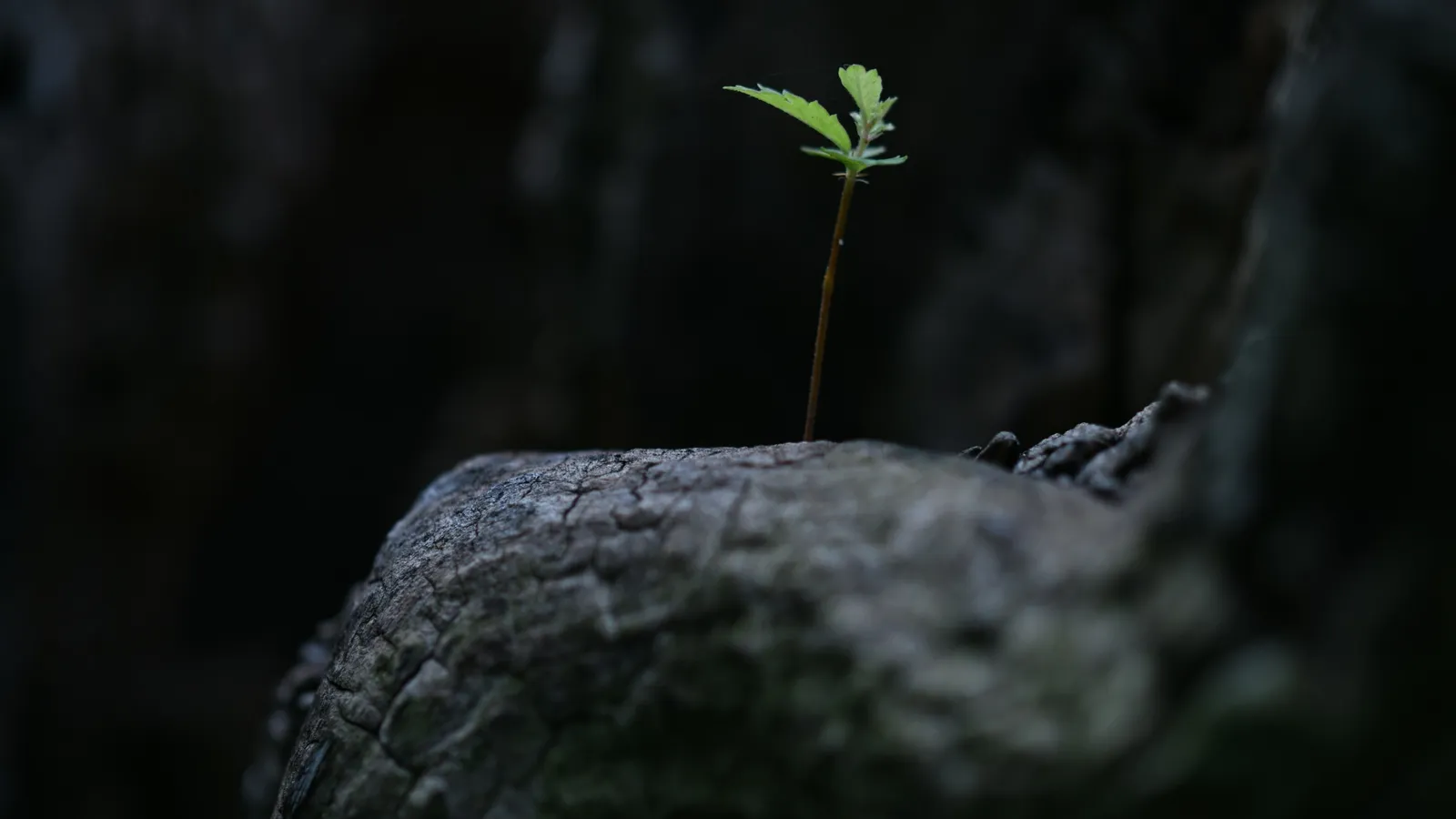
A difficult life can still be a beautiful life.
Life has given me plenty of reasons to question my circumstances in the years since Guatemala. I still don't understand why some people seem to carry so much more than others, and I don't believe suffering is necessary to appreciate what's good in life. But I've come to recognize that the things that make life beautiful don't disappear just because life gets hard. We can still love people, serve each other, find reasons to laugh, and build relationships that give meaning to days we'd rather forget.
I think back to that young man lying awake in Guatemala City, afraid of a spider hiding somewhere in the shadows. He had no idea what the next 22 months would bring, much less the next 30 years. He certainly didn't know that some of his most enduring memories would come from carrying pieces of corrugated tin through neighborhoods devastated by a hurricane.
I wish I could tell him that life gets easier. I'm not sure that's true. There will be hard days, some harder than he can imagine. There will be things he can't fix, people he can't save, and losses that will stay with him for the rest of his life. There will also be laughter, unexpected kindness, and people who show up when he needs them most. He'll have opportunities to carry someone else's burden, even when his own feels heavy, and he'll find that some of the most meaningful relationships in his life develop in circumstances he would never have chosen.
Nearly 30 years later, I still remember those 26 people gathered beneath a little tin roof. The hurricane had passed, but the rain continued to fall. There were homes still to rebuild, families still struggling, and plenty of uncertainty about what came next.
And for a little while, we sat together beneath that roof, sharing something meaningful.
There was beauty in that moment, even with everything happening around us.
I think there still is.
1 comment
Beautiful!